

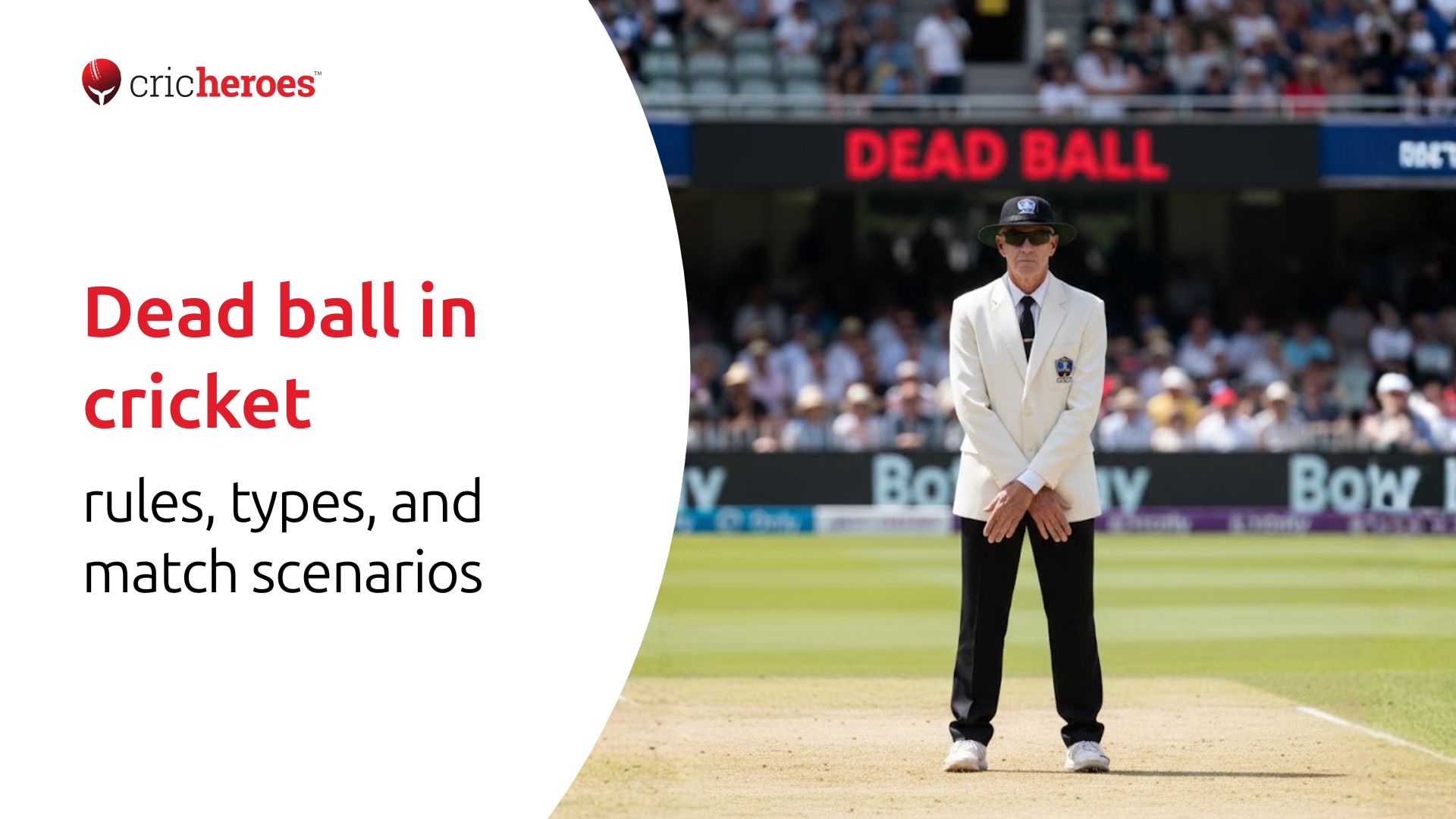


Cricket looks calm on the surface, yet many matches turn on moments when the ball is not even in play. Confusion around a dead ball in cricket causes heated debates in stadiums, group chats, and club games every weekend. Fans often stop watching, batters stop running, and fielders relax at the wrong time.
This matters now because modern cricket is faster, closer, and more umpire-driven than ever. One wrong assumption about a dead ball can flip a game. This guide explains the law, the logic, and the real match impact in clear language, without shortcuts.
What is a dead ball in cricket?
A dead ball in cricket is when the ball is no longer in play and no further runs, wickets, or actions can occur from that delivery. In simple terms, “ball not in play” means the game has paused. Nothing that happens after that moment can change the score or dismiss a batter.
The dead ball exists to create order. Cricket needs clear start and stop points so players, umpires, and scorers know exactly when play counts.
A common example is after a boundary is scored and the fielding side stops chasing the ball. At that point, the ball is dead under MCC Law 20.
Also read: Cricket Rules and Regulations
Score all your matches for free.
From friendly matches to big tournaments, CricHeroes helps you score, livestream, and analyse your game.
When does the ball become dead automatically?
There are several moments where the ball becomes dead without the umpire needing to intervene. These situations are defined clearly in the laws but often misunderstood by fans.
After a wicket falls
The ball becomes dead at the instant the batter is dismissed.
This means:
- Any runs completed before the dismissal count.
- No further runs can be scored after the wicket falls.
- Appeals do not delay the dead ball if the dismissal is clear.
The key point is timing. The ball is dead when the wicket is broken, not when players react.
When the ball reaches the boundary
Once the ball touches or crosses the boundary, it is immediately dead.
This applies to:
- Fours and sixes.
- Overthrows that reach the boundary.
- Deflections off fielders that cross the rope.
After that contact, no extra running matters.
When the ball settles with the wicketkeeper or bowler
“Finally settled” means the fielding side clearly has control and no further play is attempted.
This includes:
- The wicketkeeper holding the ball with no run attempt.
- The bowler collects the ball and turns away.
- Fielders stopping pursuit and relaxing.
This is a judgment call, which is why umpires matter so much here.
When the ball lodges in equipment
The ball becomes dead if it gets stuck and cannot be played normally.
Common cases include:
- Lodged in a batter’s pads or clothing.
- Stuck in the umpire’s clothing.
- Lodged in a helmet placed on the ground by the fielding side.
If the helmet belongs to the fielding team, five penalty runs are awarded before the ball is called dead.
When the ball is trapped between bat and body
If the ball is fully trapped and cannot move, play ends immediately. No fielder can force it loose to continue play.
When a match ends
At the end of a session, innings, or match result, the ball is dead instantly, even if it is mid-air.
When players stop treating the ball as in play
If both teams clearly stop playing and no one attempts a run or dismissal, the umpire may treat the ball as dead. This often overlaps with the “finally settled” concept.
Umpire-called dead ball situations (Law 20.4)
Some dead balls exist purely to protect fairness and safety. These require an umpire’s call.
Serious injury to a player or umpire
If someone is injured and needs attention, the umpire will call dead ball immediately to prevent risk.
Batter not ready for delivery
If the batter is not ready for a valid reason, the umpire can call dead ball.
Key points:
- The delivery does not count.
- No runs or wickets apply.
- The bowler must re-bowl.
Bowler drops the ball before delivery
If the ball slips from the bowler’s hand before the delivery stride, it is dead and does not count.
Ball does not leave the bowler’s hand
A failed release means no delivery occurred. The ball is dead instantly.
Bails fall before delivery
If the bowler breaks the stumps accidentally before delivering the ball, play is stopped and reset.
External interference
This covers anything not part of the match.
Examples include:
- Animals entering the field.
- Spectators touching the ball.
- Objects thrown onto the pitch.
- Drone wires or camera cables.
The ball is dead immediately to protect fairness.
Deliberate distraction or unfair movement
If a fielder deliberately distracts the batter, the umpire can call a dead ball and award penalty runs.
Ball becomes unrecoverable
If the ball is lost or damaged beyond use, the umpire calls dead ball and replaces it. Importantly, most of these do not count as a ball in the over.
Types of dead ball in cricket
Dead balls can be grouped by why play stopped. This makes the law easier to remember.
| Type | Description |
| Natural end-of-play | Boundary, wicket, or ball settled |
| Equipment or lodging | Ball stuck in pads, clothing, or helmet |
| Safety-based | Injury or dangerous situation |
| Delivery fault | Bowler errors before release |
| Umpire intervention | External interference or unfair play |
Understanding the type helps players know if the ball counts and whether penalties apply.
Dead ball in cricket rules explained simply
The laws look complex, but the outcomes are logical when broken down.
Can runs be scored on a dead ball?
No runs can be scored once the ball is dead. The only exception is penalty runs awarded by the umpire for unfair play or equipment interference.
Can a batter be out on a dead ball?
A batter cannot be dismissed after the ball is called dead. If the dismissal happens before the call, it stands. Timing is everything.
Does dead ball count in the over?
This depends on when it is called.
- If called before the striker receives the ball, it does not count.
- If called after a legal delivery, it usually counts.
- Wides and no balls may still count as deliveries depending on the format.
Can extras apply on a dead ball?
- Extras only apply if they occurred before the ball became dead.
- Penalty runs are the only extras added after the call.
Can appeals be made after a dead ball?
Appeals can be made if the action happened before the ball was dead. The appeal itself does not revive play.
Dead ball vs no ball vs wide vs dot ball
These terms are often mixed up but mean very different things.
| Situation | Is the ball live? | Runs allowed? | Counts in over? | Can the wicket fall? |
| Dead ball | No | No | Sometimes | No |
| No ball | Yes | Yes | Yes | Yes |
| Wide | Yes | Yes | Yes | Yes |
| Dot ball | Yes | No | Yes | Yes |
The key idea is simple. Dead ball ends play. The others do not.
How many dead balls in cricket?
There is no fixed number of dead balls in a match. Every delivery ends with the ball becoming dead naturally. Extra dead ball calls happen during unusual events like injuries or interference.
This is true across Tests, ODIs, and T20s.
When does the ball come back into play?
- The ball comes back into play when the bowler starts their run-up or bowling action.
- For bowlers without a run-up, it is when the bowling action begins.
- Once a dead ball is called, it cannot be revoked. Play must restart cleanly.
Edge cases that confuse fans
Some situations look strange but are covered by the law.
- Ball hits a helmet on the ground: dead ball, penalty runs.
- Ball hits the umpire: usually live unless it stops play unfairly.
- Batter hits the ball twice: allowed only to protect the wicket.
- Ball breaks mid-delivery: dead ball called.
- Non-striker run-out attempt after dead ball: not valid.
- Ball lodged under the advertising board: dead ball immediately.
Each case comes down to fairness and control.
Real match incidents and controversies
The IPL has seen multiple dead ball controversies from batter readiness to distraction claims. In one high-profile case, a batter stopped mid-run thinking the ball was dead, only for the fielding side to appeal successfully.
International cricket has also seen balls lodged in helmets leading to penalty runs that changed match momentum.
These moments show why players are trained to keep playing until the umpire’s call.
Dead ball in international vs domestic cricket
- The core law comes from the MCC and is the same worldwide.
- ICC playing conditions may add penalties or procedures, but the meaning of a dead ball does not change.
- Local leagues sometimes apply simplified versions, which is why confusion is common at club level.
Common myths about dead ball
- “Dead ball means no extra runs ever.” False. Penalty runs exist.
- “Dead ball only happens after a wicket.” False.
- “If bails don’t fall, it's a dead ball.” False.
- “An umpire can cancel a dead ball call.” False.
Once called, it stands.
Practical guide for club and amateur players
At non-professional levels, dead ball confusion causes most disputes.
- Never stop running until the umpire calls dead ball.
- Listen for the call, not teammates.
- Prioritize safety over assumptions.
- Ask the umpire calmly if unsure.
This alone prevents most arguments.
Umpire signal for dead ball
- The umpire crosses and uncrosses their arms above the head.
- The verbal call often comes first, followed by the signal when needed.
- An image here should show the umpire signal clearly with arms crossed above the head.
Quick summary
| Situation | Ball dead? | Counts? |
| Boundary | Yes | Yes |
| Injury stoppage | Yes | No |
| Bowler drops ball | Yes | No |
| Ball settled | Yes | Yes |
| External interference | Yes | No |
Final takeaways
A dead ball in cricket ends play completely. The umpire’s decision is final, and not all dead balls affect the over the same way. Understanding timing is the difference between chaos and clarity.
If there is one habit to keep, it is this: keep playing until the umpire tells you otherwise. That mindset wins matches at every level.
FAQs
What is a dead ball in cricket?
A dead ball in cricket is when the ball is not in play and no action can affect the score.
Who decides a dead ball?
The umpire has the final authority to call and signal a dead ball.
Does dead ball count as a delivery?
Sometimes. It depends on when the call is made.
Can you be run out after dead ball?
No, dismissals cannot happen after the call.
Can penalty runs be scored on dead ball?
Yes, penalty runs can be awarded by the umpire.
What happens if the ball hits a bird?
The umpire usually calls dead ball due to external interference.
Is dead ball same in T20 and Test cricket?
Yes, the core law is the same across formats.

SEO All-Rounder
Manan Joshi is a cricket writer & content strategist at CricHeroes who covers the game from the ground up — rules, technique, player development, grassroots tournaments, and IPL. His writing is shaped by real insights drawn from millions of live-scored matches, giving him a perspective on recreational cricket that few writers have access to. CricHeroes is the #1 Cricket Scoring App globally, with 4 crore+ cricketers using it to live score their local matches and tournaments. For cricket apparel and accessories, visit the CricHeroes Store.