



Cricket fans worldwide have witnessed moments of controversy caused by umpiring decisions. To address this, the DRS was introduced—a game-changing innovation. But what exactly is DRS in cricket? How does it work, and why has it become so essential? This guide breaks it all down in simple terms.
Whether you’re curious about the DRS full form in cricket, how long players have to request it (the DRS timer rule), or its overall impact—this guide answers it all.
What Is DRS in Cricket?
The Decision Review System (DRS) in cricket is a is a technology-driven tool used to review and, if needed, overturn on-field umpiring decisions. Whether it’s an LBW in cricket, a close catch, or a run-out, DRS gives players the ability to challenge a call they feel is incorrect.
This system uses advanced technologies like ball-tracking, UltraEdge, and Hawk-Eye to make sure decisions are as correct as possible. By reducing mistakes, the Decision Review System (DRS) has changed the way cricket is played, making the game fairer for both players and fans.
DRS Full Form in Cricket
The full form of DRS is Decision Review System. In the context of cricket, DRS allows players to challenge umpiring decisions using technology. The DRS full form in cricket highlights its purpose: making decisions fair and reviewable.
For example:
- A bowler appeals for an LBW, but the umpire says “not out.”
- If the fielding captain believes it was a mistake, they can call for DRS.
- Technology then determines whether the original decision was correct.
This ability to challenge decisions has made cricket more transparent and enjoyable for everyone.
Why Was DRS Introduced in Cricket?
Before DRS, players and fans often felt frustrated by incorrect umpire calls. Some decisions even changed the outcome of matches. To fix this, the ICC (International Cricket Council) introduced DRS in 2008.
Here’s why DRS is important:
- It minimizes human error in umpiring.
- It ensures that key moments are judged fairly.
- It increases player confidence in the decision-making process.
Today, DRS is a standard feature in most international matches.
How Does DRS Work?
The DRS process is straightforward but highly effective. Here’s how it works:
- Player Request for Review:
- A batsman or fielding captain can signal for DRS if they disagree with the umpire’s call.
- This must be done within 15 seconds of the decision.
- Third Umpire Examination:
- The third umpire reviews video footage and data from technologies like Hawk-Eye, UltraEdge, and ball-tracking.
- The third umpire reviews video footage and data from technologies like Hawk-Eye, UltraEdge, and ball-tracking.
- Final Decision:
- Based on the evidence, the third umpire either upholds or overturns the original decision.
What Is the DRS Timer Rule?
The DRS timer rule is crucial to how the Decision Review System functions in cricket. Once the on-field umpire makes a decision, the players have exactly 15 seconds to decide whether to challenge it using DRS.
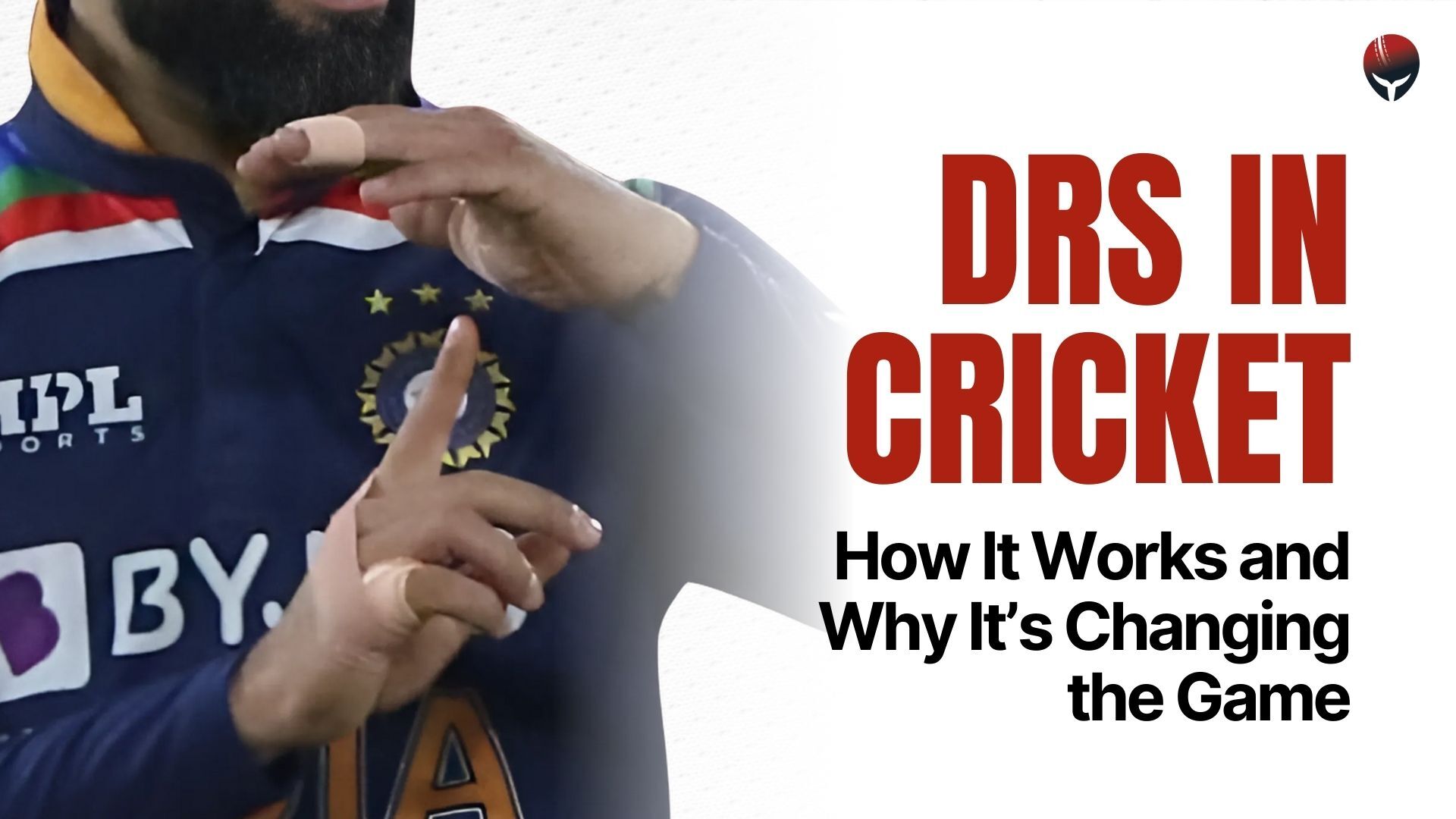
This countdown starts immediately after the umpire’s signal, and the team must make a clear “T” gesture within that time. If the timer runs out, the review cannot be taken—even if the decision turns out to be incorrect.
The timer rule ensures that the game flows smoothly and reviews are not delayed.
Tools That Make DRS Effective
DRS wouldn’t be possible without advanced technology. Here are the key components that power it:
- Hawk-Eye: Tracks the ball’s trajectory to predict where it would have gone.
- UltraEdge: Detects even the faintest contact between the bat and ball.
- Ball-Tracking: Shows whether the ball would have hit the stumps for LBW reviews.
- Slow-Motion Replays: Used for reviewing catches, stumpings, and run-outs.
These tools work together to ensure decisions are accurate, even in tight situations.
Rules for Using DRS
To maintain fairness, the ICC has set specific rules for using DRS:
- Who Can Request a Review?
Only the batsman (if given out) or the fielding captain can call for DRS. - Time Limit:
Teams have just 15 seconds—known as the DRS timer rule—to decide whether to go for a review. - Review Limit:
- In Test matches, each team gets two unsuccessful reviews per innings.
- In ODIs and T20Is, teams get one unsuccessful review per innings.
These rules ensure that teams use DRS strategically rather than frivolously.
What Decisions Can Be Reviewed?
Not every decision in cricket can be reviewed. Here’s what DRS covers:
- LBW (Leg Before Wicket): Was the ball going on to hit the stumps?
- Caught Behind: Did the ball touch the bat before being caught?
- Run-Outs and Stumpings: Was the batsman out of the crease?
- Boundary Checks: Did the fielder touch the boundary while stopping the ball?
Certain calls, like wides and no-balls, are generally not reviewable unless they involve dismissals.
Common Myths About DRS
Despite its popularity, there are a few myths and misunderstandings about DRS:
- “DRS is Always Correct.”
While DRS is highly accurate, it relies on technology that isn’t perfect. - “Umpire’s Call is Biased.”
The “Umpire’s Call” rule means the on-field umpire’s decision stands if the evidence is inconclusive. It’s not a flaw but a safeguard. - “Teams Lose Reviews Unfairly.”
Teams lose a review only if the challenge is unsuccessful, not because the system is faulty.
Benefits of DRS in Cricket
DRS has made a massive impact on cricket. Here’s why it’s so valuable:
- Fair Play: Ensures teams aren’t punished by umpiring mistakes.
- Fan Engagement: Makes matches more transparent and enjoyable.
- Boosts Confidence: Players trust the decision-making process.
Challenges of DRS:
- High Costs: The technology is expensive and not always available for smaller matches.
- Time Delays: Reviews can slow down the game.
- Technology Limitations: DRS is only as good as the tools it uses.
Despite these challenges, DRS is widely regarded as a positive innovation.
How DRS Differs in Test Matches, ODIs, and T20Is
DRS rules vary depending on the format:
Test Matches:
- Teams get two reviews per innings.
- Reviews are more common due to the slower pace of the game.
ODIs and T20Is:
- Only one review per innings.
- Reviews are used more sparingly in these fast-paced formats.
This flexibility ensures that DRS fits the unique demands of each type of cricket.
DRS in Action
In the 2019 World Cup Final between England and New Zealand, the DRS played a crucial role in some tight LBW decisions. Similarly, MS Dhoni’s last-second DRS call in an India vs England match in 2017 is still talked about for its accuracy and timing.
Conclusion
The Decision Review System (DRS) has made cricket fairer and more transparent. By blending advanced technology with well-defined rules, DRS ensures that crucial moments in the game are judged accurately and consistently. It highlights the perfect mix of human skill and technological support that makes cricket so special.
Whether you’re a casual fan or a passionate follower of the sport, understanding DRS adds another layer of excitement to watching cricket. The next time you see a batsman signal for a review, you’ll know exactly how the process works and why it’s such an integral part of the game.
Take Your Cricket to the Next Level
At CricHeroes, we believe that your cricket matters just as much. With CricHeroes, you can keep track of your stats, score matches live like the professionals, analyze your performance to improve, and connect with the cricket community to share your achievements. Whether you’re chasing your first century, taking a match-winning wicket, or simply playing for the love of the game, CricHeroes ensures that your efforts are captured and valued. Because no matter where you play, your cricket matters.
FAQs About DRS in Cricket
What Is DRS in Cricket?
DRS, or Decision Review System, is a technology-based process for reviewing umpire decisions during matches.
What Is the Full Form of DRS in Cricket?
The full form of DRS is Decision Review System. It allows teams to challenge umpire decisions using advanced technology like Hawk-Eye and UltraEdge.
What Is the DRS Timer Rule in Cricket?
It refers to the 15-second time limit a team has to request a DRS after an on-field decision is made.
What Does Umpire’s Call Mean?
It’s a rule where the on-field umpire’s decision is upheld if the technology shows inconclusive evidence.
How Many Reviews Are Allowed in DRS?
Teams get two reviews per innings in Test matches and one in ODIs/T20Is.
Why Was DRS Introduced?
DRS was introduced to minimize umpiring errors and ensure fair play in cricket.
Will DRS Be Used in Every Match?
Not all matches have DRS due to the high costs of technology and equipment

I am Manan Joshi , SEO All-Rounder at CricHeroes.
CricHeroes is the ultimate Cricket Scoring App and the world’s only true Cricket Network. With more than 4 crore+ registered cricketers using CricHeroes to Live Cricket Scores for their local cricket matches and tournaments, CricHeroes is already the #1 Cricket Scoring App Globally!
We also proudly present “CricHeroes Store” by CricHeroes, a dedicated shop for cricket apparel and accessories, helping players gear up for their game.