



There are many types of cricket shots, and each one has its own role in building a complete batting game. Some shots are played for survival, some for scoring quickly, and some for pure timing. The on drive sits in a special place among them. It is controlled, balanced, and relies more on technique than brute force.
For many batters, the on drive is also one of the first shots that shows whether their basics are strong. When played well, it looks effortless. When played poorly, it exposes footwork, balance, and head position. That is why learning how to play an on drive correctly matters at every level, from beginners to serious club cricketers.
This guide explains the on drive in simple terms. You will learn what the shot is, how it differs from a straight drive, the correct technique step by step, useful practice drills, and the mistakes you should avoid.
What is an on drive in cricket?
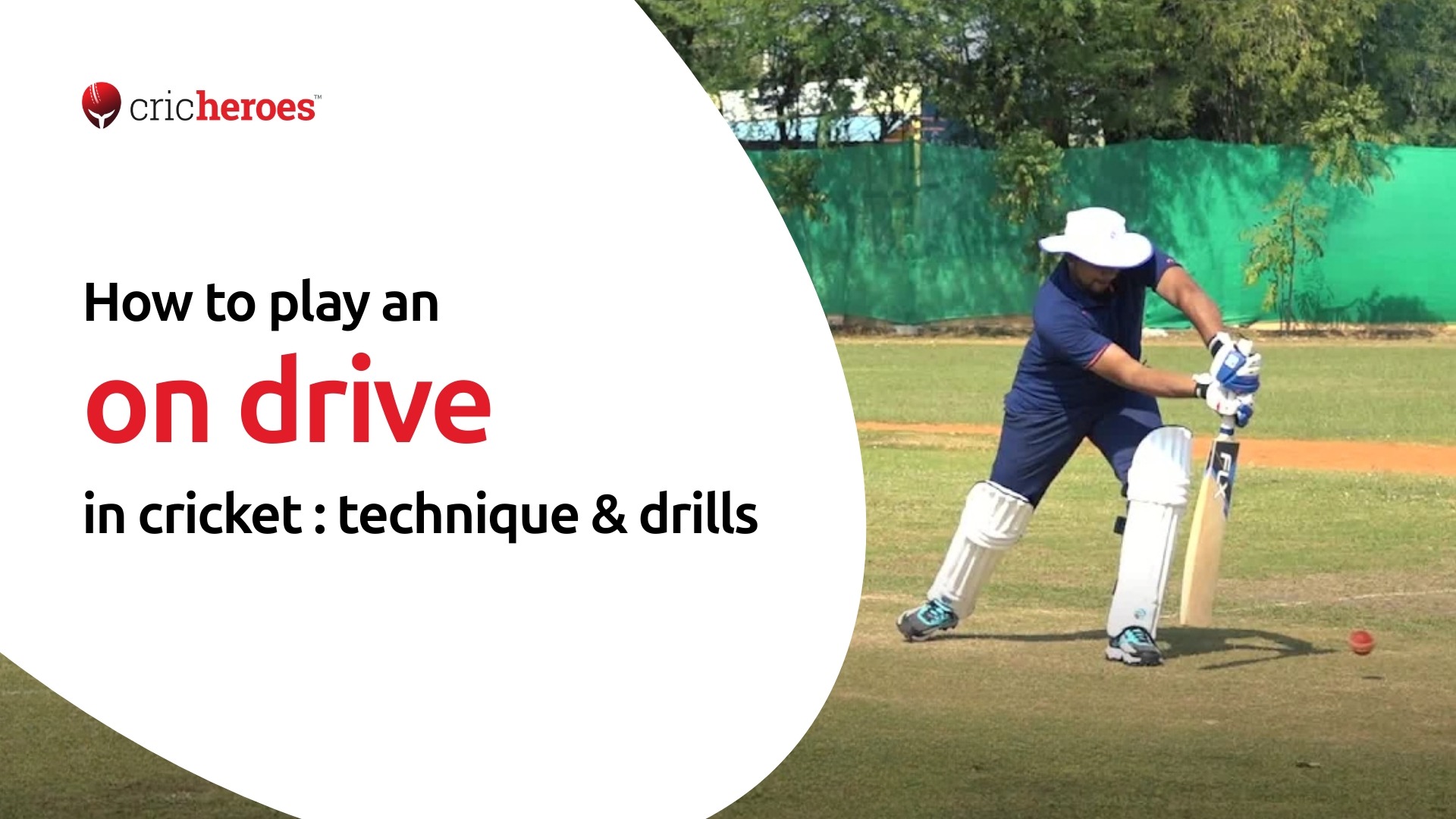
The on drive is a straight-bat shot played along the ground towards the long-on or mid-on region. It is usually played to full or slightly overpitched deliveries that are aimed at the stumps or drifting into the pads.
The shot rewards good balance and timing rather than power. Unlike leg-side flicks, the bat comes down straight and close to the body, keeping the ball on the ground.
Key characteristics of the on drive include:
Score all your matches for free.
From friendly matches to big tournaments, CricHeroes helps you score, livestream, and analyse your game.
- Played with a straight bat
- Targeted towards mid-on or long-on
- Best suited to full or good-length balls
- Focused on balance, timing, and control
When executed properly, the on drive allows a batter to score runs safely while staying side-on and stable at the crease.
The value of this shot lies in control. It reduces risk, helps rotate strike, and forces bowlers to change their length.
On drive vs straight drive – what is the difference?
Many players confuse the on drive with the straight drive because both shots are played down the ground. While they look similar, the intent and bat path are slightly different.
The main differences become clear when you look at the line of the ball and the scoring area.
- An on drive is played to balls on the stumps or leg-side of off stump
- A straight drive is played to balls on or outside off stump
- The on drive targets mid-on or long-on
- The straight drive targets straight past the bowler
Because of this, the on drive often requires a small movement towards the leg side, while the straight drive stays more neutral.
Understanding this difference helps players choose the correct shot and avoid playing across the line.
How to play an on drive in cricket
To play an on drive in cricket, step towards the ball with a small stride, bend your front knee, keep your head forward and over the point of contact, and swing the bat in a straight line through the ball towards mid-on. Finish with your hands high, body balanced, and the ball met under your eyes for control.
That is the core idea. Below is a clear breakdown of each technical part.
Batting stance and grip
Every good on drive starts before the ball is bowled. Your stance and grip decide how easily you can move into position.
Set yourself up with a balanced and relaxed stance. Your feet should be shoulder-width apart, knees slightly flexed, and weight evenly spread. Hold the bat with a natural V-grip, keeping your hands soft rather than tight.
Important stance points to remember:
- Head still and eyes level
- Shoulders facing the bowler
- Bat resting behind the back foot
- Grip firm but relaxed
A calm and stable stance allows smoother movement when the ball is pitched up.
Also read: Cricket tips
Trigger movement and footwork
As the bowler approaches delivery, a small trigger movement helps you prepare your body. This is usually a slight movement of the back foot towards off stump, followed by balance on the front foot.
Once the ball is released and you judge it as full enough, step forward with your front foot. The step should be small and controlled, slightly opening towards the leg side to create space for the bat swing.
Good footwork during the on drive involves:
- Moving forward, not across too much
- Getting close to the pitch of the ball
- Keeping feet light and balanced
This movement places your body in line with the ball and reduces the chance of mistimed shots.
Head position and balance
Head position is the most important factor in playing a clean on drive. Your head should move forward with your front foot and stay over the front knee at the point of contact.
This does three things at once. It keeps your balance steady, helps you judge the ball better, and allows the bat to swing straight.
Focus on these head position cues:
- Eyes level and still
- Head directly above the ball
- No falling sideways
A slight forward lean is acceptable as long as your balance remains under control.
Backlift and downswing
A controlled backlift sets up the shot. Lift the bat smoothly with your hands close to the body. Avoid lifting it too wide, as that can lead to an angled downswing.
As the bat comes down, it should travel in a straight line towards the ball. Your top hand guides the bat, while the bottom hand supports the swing.
Key bat swing points include:
- Straight downswing
- Hands close to the front pad
- Bat face presented fully
This straight path is what separates a proper on drive from a risky leg-side shot.
Contact point and timing
The ball should be met under your eyes, usually a foot or so in front of your front foot. This allows you to control direction and keep the ball on the ground.
Timing matters more than force here. Let the ball come to you, and trust the swing rather than forcing power.
At contact, remember to:
- Keep wrists firm but relaxed
- Watch the ball onto the bat
- Play along the ground
Clean contact leads to effortless runs and fewer chances for fielders.
Follow through and finish
The follow through completes the shot. After contact, let your arms extend naturally, finishing high towards mid-on. Your shoulders will rotate slightly, and your back foot may release to maintain balance.
Against fast bowlers, a controlled follow through is enough, using the pace of the ball. Against spinners, a fuller swing with wrist work helps guide the ball into gaps.
A good finish shows:
- Hands high
- Body balanced
- Head still after contact
If your finish feels rushed or off-balance, revisit your footwork and head position.
When should you play the on drive?
Shot selection is as important as technique. The on drive should only be played to the right deliveries.
The best balls for the on drive are:
- Full or overpitched deliveries
- Balls aimed at the stumps or pads
- Slower balls that sit up
Avoid playing this shot to short balls or deliveries moving sharply away. Waiting for the right ball reduces risk and improves consistency.
Practice drills to improve your on drive
Skill improves through repetition and correct practice. Structured drills help reinforce movement and timing.
Below are proven drills that work for players at all levels.
- Net throwdowns with a tennis ball or sidearm
- Drop-ball drills focusing on stepping forward
- Tee cone batting to fix contact point
- Shadow batting to rehearse movement
Each drill builds muscle memory without match pressure. Start slowly and focus on balance before increasing intensity.
Regular practice with these drills improves confidence when the right ball arrives in a match.
Learning from top players
Watching elite batters helps you understand timing and balance. Players like Sachin Tendulkar, Virat Kohli, Joe Root, and Ajinkya Rahane all play the on drive with calm footwork and still heads.
Notice how they do not rush the shot. Their movement is small, their bat swing is straight, and their balance remains steady after contact.
Imitating these basics, not their power, is the key lesson.
Common mistakes to avoid while playing the on drive
Even technically sound players struggle with the on drive when small habits creep in. Awareness helps fix them early.
The most common mistakes include:
- Over-striding and losing balance
- Playing across the line
- Head falling to the leg side
- Trying to hit too hard
Each mistake increases the chance of mistiming or getting caught. Correcting footwork and slowing down the shot usually solves most problems.
Equipment and comfort matter
Comfort affects technique more than players realise. Well-fitted pads allow smooth movement, and gloves with proper grip help control the bat.
Using a bat with balanced weight also supports clean timing. The goal is control, not raw hitting power.
Key takeaways
The on drive is a foundational cricket shot built on balance, timing, and straight bat technique. It rewards patience and correct movement rather than force.
Focus on footwork, keep your head over the ball, choose the right deliveries, and practice with simple drills. Over time, the shot becomes natural and reliable.
Frequently asked questions
What is an on drive in cricket?
An on drive is a straight-bat shot played along the ground towards mid-on or long-on.
Which ball is best for an on drive?
Full or slightly overpitched deliveries aimed at the stumps or pads.
Is the on drive risky?
No, it is a low-risk shot when played to the correct ball with proper balance.
Can beginners learn the on drive easily?
Yes, it is one of the best shots for beginners to build technique.
Is the on drive different from a flick shot?
Yes, the on drive uses a straight bat, while the flick uses a cross-bat motion.
Should I play the on drive to fast bowlers?
Yes, but only to full balls and with controlled follow through.
Do I need power to play the on drive?
No, timing and balance matter more than strength.
Where should my head be during the shot?
Your head should be over the front knee and in line with the ball.
Can spinners be driven on the on side?
Yes, especially when they bowl full and slow.
How can I practice the on drive at home?
Shadow batting and tee cone drills work well in limited space.

SEO All-Rounder
Manan Joshi is a cricket writer & content strategist at CricHeroes who covers the game from the ground up — rules, technique, player development, grassroots tournaments, and IPL. His writing is shaped by real insights drawn from millions of live-scored matches, giving him a perspective on recreational cricket that few writers have access to. CricHeroes is the #1 Cricket Scoring App globally, with 4 crore+ cricketers using it to live score their local matches and tournaments. For cricket apparel and accessories, visit the CricHeroes Store.