



Cricket, often dubbed the “gentleman’s game,” has a set of intricate rules that govern every aspect of the match. Among these, the no-ball is one of the most important calls an umpire can make, directly impacting the flow of the game. Understanding what constitutes a no ball, the consequences it holds, and its variations across different formats is crucial for players, fans, and umpires alike.
This article will explore all aspects of no ball rules in cricket, from causes to effects, and help you navigate the complex regulations that come with it.
What is a no ball in cricket?
A no ball in cricket refers to any delivery by the bowler that violates the Laws of Cricket. The umpire makes this call when the bowler delivers the ball illegally, giving the batting side an advantage and penalizing the fielding side. A no ball leads to one extra run awarded to the batting team, and the delivery does not count as part of the six balls in an over, requiring the bowler to bowl an additional delivery.
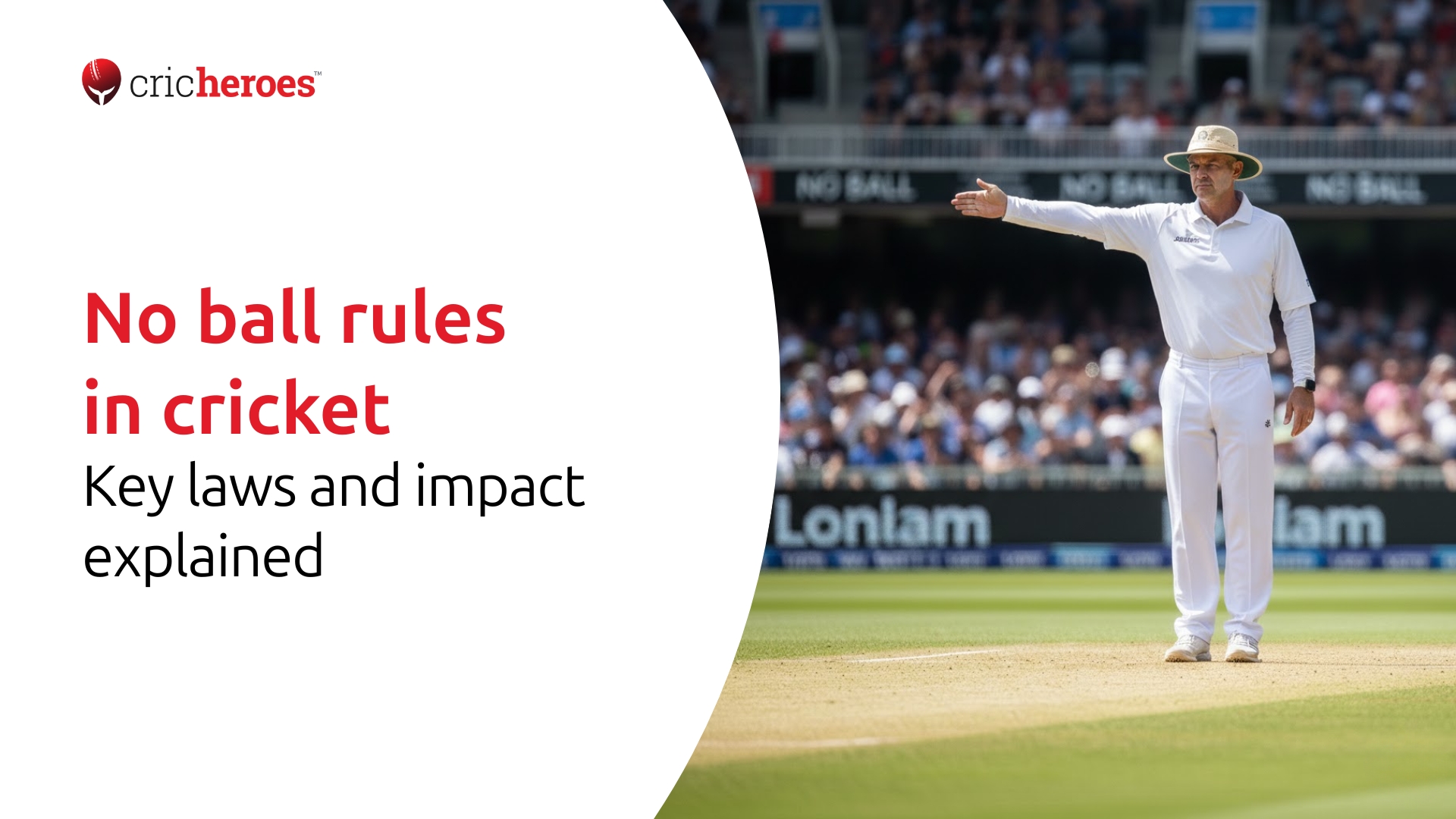
When the umpire calls a no ball, they signal it by raising one arm horizontally. There are various causes for a no ball, ranging from the bowler’s foot crossing the line to more complex actions like dangerous or unfair deliveries.
History of no ball
The no ball rule has evolved significantly over time, from the first mention of the bowler needing to keep their back foot behind the crease in the 1774 Laws of Cricket, to the more modern focus on dangerous and unfair deliveries. Today’s regulations are a blend of these early laws and innovations designed to maintain fairness and protect the safety of batters.
Causes of no balls in cricket
A no ball can be called for multiple reasons. Below are the common causes that make a delivery illegal:
Score all your matches for free.
From friendly matches to big tournaments, CricHeroes helps you score, livestream, and analyse your game.
Illegal action by the bowler
Position of feet
The most common reason for a no ball is the bowler’s front foot overstepping the popping crease. For a delivery to be legal, the bowler must keep part of their front foot behind the popping crease when they bowl the ball. A bowler’s back foot must also stay within the return crease.
Also read: How Many Creases Are There in Cricket?
Method of delivery
The bowler must use a legal action when delivering the ball. If the bowler throws the ball instead of bowling it, the umpire calls a no ball. Similarly, the umpire does not allow underarm bowling unless both teams agree to it before the match.
Unfair / dangerous bowling
The umpire automatically calls a beamer, a full toss that passes over the batter’s waist height—a no ball because it is dangerous. The umpire can also call a short-pitched delivery (bouncer) a no ball if they deem it excessively dangerous.
Illegal action by a fielder
The umpire calls a no ball if fielders encroach onto the pitch during the bowler’s delivery stride, as prohibited under ICC/MCC Laws.
All types of no ball rules according to ICC laws
There are several types of no balls, each governed by different laws. Here’s a breakdown of the common ones.
Front foot no ball
A front foot no ball occurs when the bowler’s front foot lands outside the popping crease. The introduction of TV replays has made this violation easier to spot, leading to more accurate calls. This is a common no ball, especially in shorter formats, and it triggers a free hit in formats like ODIs and T20Is.
Back foot no ball
The umpire calls a back foot no ball when the bowler’s back foot lands outside the return crease. While less common than the front foot no ball, it’s still an important rule to prevent bowlers from gaining an unfair angle on deliveries.
Illegal bowling action (throwing)
The umpire considers a delivery illegal if the bowler’s elbow extends excessively, making the action resemble a throw rather than a legal bowl. Law 21.2 prohibits throwing and may result in a warning or suspension for repeated offenses.
Umpire Action on Illegal Throwing
If the umpire judges a bowler to be throwing or bowling underarm illegally, they call a no ball and issue a first and final warning. Any further offense in the same innings leads to the bowler’s suspension from bowling, and the umpire reports the incident to the match authorities.
Also read: All about cricket umpire hand signals
Change in mode without notification
If a bowler changes the mode of delivery (e.g., switching from right-arm to left-arm) without notifying the umpire, this results in a no ball. This ensures transparency and fairness during play.
Ball bouncing more than once or rolling
The umpire calls a no ball if the ball bounces more than once before reaching the batter or rolls along the ground. This prevents unpredictable deliveries from unfairly disrupting the game.
Ball Coming to Rest in Front of Batter
If the delivery comes to rest in front of the striker’s wicket or is so far away that the striker must leave the pitch to attempt a shot, the umpire calls no ball and immediately signals dead ball.
Ball Pitching Off the Pitch
The umpire calls a no ball if a delivery lands wholly or partially outside the pitch area before reaching the striker’s wicket line.
Bowler breaking wicket during delivery
If a bowler breaks the wicket (knocks the stumps) during delivery, a no ball is called. This includes when the bowler’s clothing or body touches the stumps.
Dangerous non-pitching deliveries: full toss (beamer)
A beamer—a full toss that reaches the batter at head or waist height—is considered dangerous and immediately ruled a no ball under Law 41.7.
Fielding restrictions violation
In formats like T20s and ODIs, fielding restrictions exist, particularly for powerplays. If the fielding side violates these rules, such as having more than two fielders behind square on the leg side, the umpire may call a no ball.
Wicketkeeper Position No Ball
The umpire calls a no ball if the wicketkeeper fields the ball in front of the stumps before it passes the striker or touches the bat, as prohibited under Law 27.3.
Deliberate front foot no ball
When a bowler deliberately oversteps the front foot line, they are committing a deliberate no ball. This is considered unfair play and is penalized accordingly.
Head-High Bouncer No Ball
A delivery is called a no ball if, after pitching, it passes or would have passed above the striker’s head height while standing upright at the crease. This rule protects batters from extremely dangerous short-pitched bowling.
Effects of no balls in cricket
Dismissal
While most dismissals (e.g., bowled, caught, LBW) cannot occur off a no ball, the batter can still be dismissed for run out, hitting the ball twice, or obstructing the field. This rule protects batters from being dismissed off an illegal delivery but does not eliminate all dismissal possibilities.
Additional delivery
A no ball does not count as one of the six balls in an over. Therefore, the bowler must deliver an additional ball. If the next ball is also a no ball or wide, the same process continues until a legal delivery is bowled.
Free hit
In limited-overs formats like T20s and ODIs, a no ball triggers a free hit on the next delivery. The umpire prevents the batter from being dismissed by conventional means (such as bowled or caught) on a free hit, adding a layer of strategy and excitement to the game.
Runs
The batting team receives one extra run for a no ball. Any runs scored off the delivery—such as boundaries or byes—are added to the team’s total. The no ball penalty run is counted immediately and remains valid even if the batter is dismissed on that delivery.
How Runs Are Scored on a No Ball
The umpire records the one-run penalty as a no ball extra and charges it to the bowler. The umpire credits any additional runs to the striker if the ball was hit off the bat, or counts them as byes or leg byes otherwise.
Ball Remains in Play
Even after a no ball is called, the ball does not become dead. Batters can still run additional runs, and dismissals like run out remain possible.
Other effects
No balls can lead to dangerous and unfair play sanctions. For example, the umpire may suspend or report a bowler who repeatedly bowls beamers or deliberately oversteps.
No Ball Takes Priority Over Wide
If a delivery qualifies as both a wide and a no ball, the no ball call overrides the wide. The batting side receives the no ball penalty first.
No ball out rules in cricket
A batter cannot be out off a no ball unless the dismissal involves run out, hit the ball twice, or obstructing the field. This ensures that a no ball does not lead to the loss of a batter except under special circumstances.
Variations in no ball rules across cricket formats
No ball rules remain consistent across all formats but have slight variations in their application:
No ball rules in T20 cricket
In T20 cricket, every no ball results in a free hit, allowing the batter to play the next delivery without the risk of dismissal (except for a run out). Given the fast-paced nature of the format and strict fielding restrictions, no balls can have a significant impact on the outcome of the match.
No ball rules in test cricket
In Test cricket, the umpire does not award a free hit after a no ball. The umpire limits the penalty to an extra run, reflecting the format’s focus on technique, discipline, and long-term match strategy rather than immediate advantage.
No ball rules in ODI cricket
In One Day Internationals, the umpire awards a free hit for front-foot no balls and certain other bowling infringements. This rule adds a strategic advantage for batters, enabling more aggressive play on the following delivery.
Conclusion: Why no ball rules matter
Players, umpires, and fans must understand no ball rules to ensure cricket matches are played fairly and safely. They prevent bowlers from gaining an unfair advantage and protect batters from dangerous deliveries.
Following these rules ensures that cricket remains a game of precision, skill, and fair play, keeping every match within the spirit of the game.
FAQs
What happens when a no ball is called in cricket?
A no ball results in an extra run for the batting team, and the delivery does not count toward the over. In limited-overs formats, the following delivery is a free hit.
Why does a front foot no ball trigger a free hit in limited-overs cricket?
The free hit rule in limited-overs cricket penalizes bowlers for overstepping the crease and gives batters the chance to play without fear of dismissal in the usual ways, adding excitement to the game.
Can a batter be dismissed on a no ball?
The umpire cannot dismiss a batter on a no ball, except for run out, hitting the ball twice, or obstructing the field.
What is the difference between a no ball and a wide?
The umpire calls a no ball for illegal deliveries, such as foot faults, and a wide when the ball is out of the batter’s reach. If both occur on the same delivery, the umpire gives precedence to the no ball.
Why are beamers considered dangerous and called no balls?
Umpires immediately call a beamer—a full toss above waist height—a no ball because it is dangerous and can injure the batter.
Does a no ball count as a ball faced?
No, a no ball does not count as a ball faced by the batter.
What constitutes a no ball in cricket?
The umpire can call a no ball for various reasons, including overstepping, an illegal bowling action, dangerous deliveries, or fielding violations.
References

SEO All-Rounder
Manan Joshi is a cricket writer & content strategist at CricHeroes who covers the game from the ground up — rules, technique, player development, grassroots tournaments, and IPL. His writing is shaped by real insights drawn from millions of live-scored matches, giving him a perspective on recreational cricket that few writers have access to. CricHeroes is the #1 Cricket Scoring App globally, with 4 crore+ cricketers using it to live score their local matches and tournaments. For cricket apparel and accessories, visit the CricHeroes Store.